
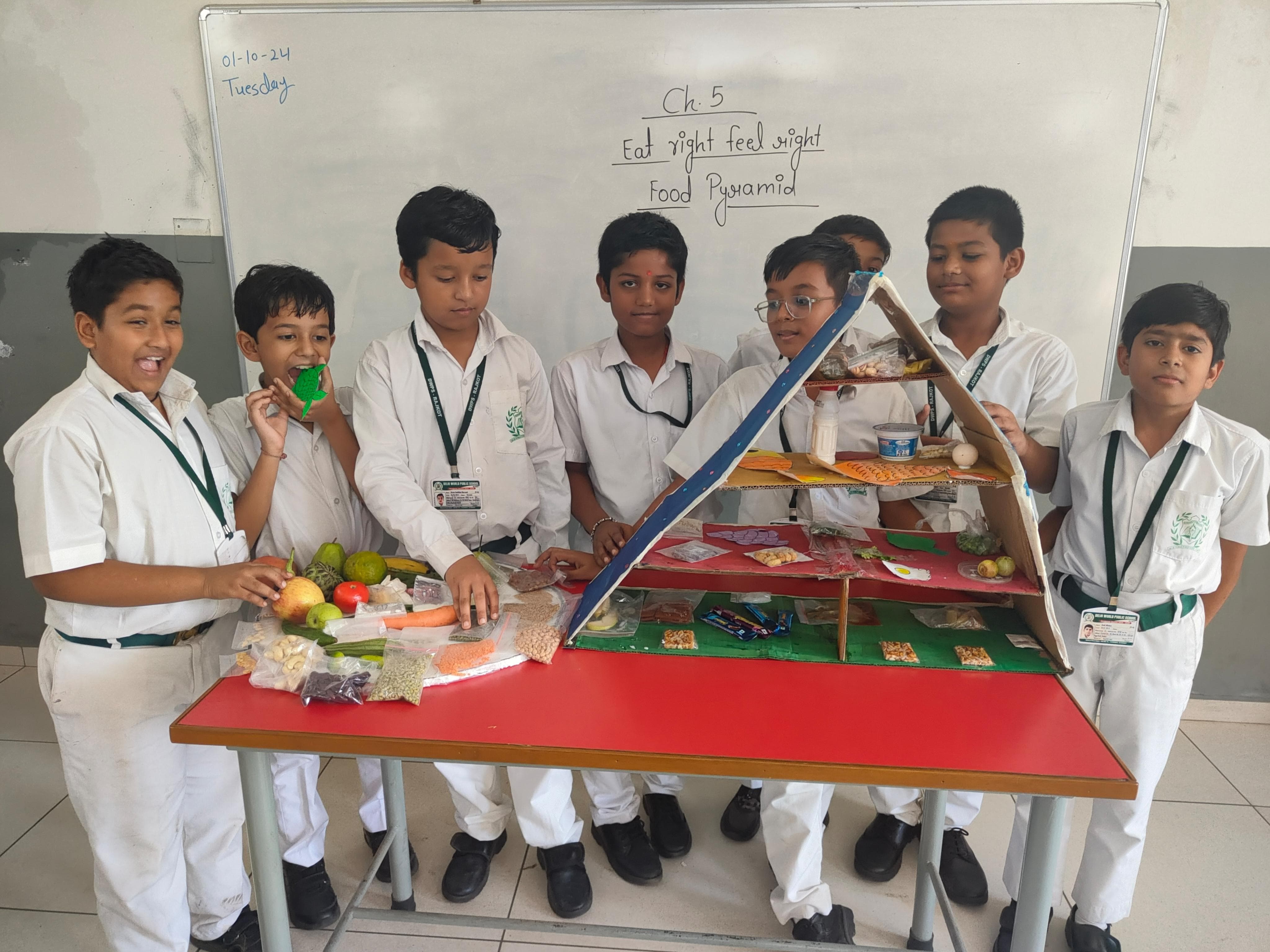
Delhi World Public School (DWPS) focuses on promoting experiential learning allows students to connect theoretical knowledge with practical applications. To foster a deeper understanding of healthy eating and nutrition, the “Food Pyramid” is introduced as a central theme in the classroom.


Learning Objectives:
The lesson on the “Food Pyramid” aims to achieve the following objectives:
- Comprehend the Structure of the Food Pyramid: Students will understand the hierarchy and significance of the various food groups within the food pyramid model.
- Recognize the Nutritional Value of Foods: Students will learn about the nutritional importance of each food group and its contribution to overall health.
- Apply Knowledge to Daily Choices: Students will be able to utilize their understanding of the food pyramid to create balanced and healthy meals in their daily lives.
- Encourage Critical Thinking about Nutrition: Students will be encouraged to critically evaluate their own dietary habits and recognize areas for potential improvement.
Learning Outcomes:
By the end of the lesson, students are expected to achieve the following outcomes:
- Knowledge: Students will accurately identify and describe the five major food groups: grains, vegetables, fruits, protein, and dairy, as well as understand their relative proportions in a balanced diet.
- Skills: Students will categorize food items into appropriate groups based on their nutritional content.
- Practical Application: Students will demonstrate the ability to design a healthy meal plan based on the food pyramid guidelines, showing an understanding of balanced nutrition.
- Self-awareness: Students will reflect on their eating habits and identify ways to make healthier choices, recognizing the significance of moderation and variety in their diet.
Suggested Activities:
To ensure that learning is both engaging and experiential, the following activities are recommended:
- Food Group Sorting Game:
- Objective: Reinforce the identification and categorization of different food items.
- Method: Students will be provided with a set of images or actual food items (if possible) and asked to categorize them into the five food groups of the pyramid. This activity can be conducted in small groups to encourage collaboration.
- Outcome: Students will develop a stronger understanding of how foods are grouped and recognize the importance of each category in a balanced diet.
- Create a Personal Food Pyramid:
- Objective: Encourage students to connect the food pyramid model with their personal eating habits.
- Method: Students will draw a food pyramid and fill in sections with foods they eat regularly. They will then explain their choices and suggest improvements based on the nutritional guidelines provided by the food pyramid.
- Outcome: Students will engage in self-reflection, identify unhealthy patterns, and become more aware of how they can improve their diet.
- Balanced Meal Plan Creation:
- Objective: Enable students to apply their theoretical knowledge of nutrition in a practical setting.
- Method: Students will design a one-day meal plan based on the food pyramid. They will be encouraged to consider portion sizes and diversity in food choices to ensure a balanced intake of all essential nutrients.
- Outcome: Students will demonstrate their ability to create a nutritionally balanced meal, applying their knowledge of the food pyramid to real-life situations.
- Class Discussion and Reflection:
- Objective: Promote critical thinking and encourage students to share their insights.
- Method: Conduct a class discussion where students share their meal plans and personal food pyramids. Facilitate a reflection on the importance of each food group and the role of nutrition in maintaining health.
- Outcome: Through open dialogue, students will deepen their understanding of the importance of nutrition and make connections between healthy eating habits and overall well-being.
Conclusion:
The “Food Pyramid” lesson provides an excellent opportunity for students to engage in experiential learning, where they actively explore concepts of nutrition, healthy eating, and personal responsibility in diet choices. Through hands-on activities, reflective discussions, and practical applications, students will not only understand the food pyramid but also develop the skills to make informed and balanced dietary decisions. This experiential approach aligns with DWPS’s commitment to holistic education and the promotion of lifelong healthy habits.
Principal
Rajeev Ranjan


Leave a Reply