
Science Activity Report
Topic: “Combustion and Flame” – A Hands-on Project-Based Learning Approach
Combustion is a chemical process in which a substance reacts with oxygen to give off heat and light. This process is commonly known as burning.
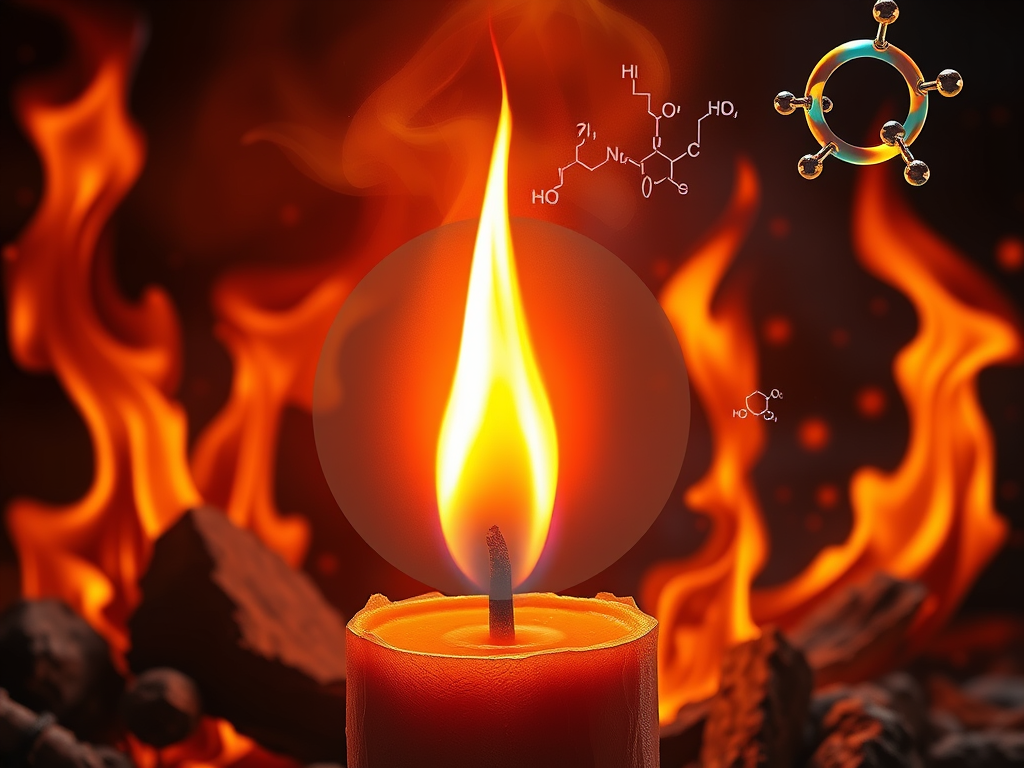
A flame is the visible part of the combustion reaction. It is produced when gases released during combustion become hot enough to glow.
Learning Objectives:
- To help students understand the concept of combustion and flame through observation and experimentation.
- To differentiate between types of combustion: rapid, spontaneous, and explosive.
- To identify the essential conditions for combustion (fuel, oxygen, and ignition temperature).
- To understand the structure of a flame and the uses of different zones.
- To promote scientific inquiry and analytical thinking through project-based experiments.
Learning Outcomes:
By the end of the activity, students will be able to:
- Define combustion and explain how flames are produced.
- Identify and explain the different types of combustion through real-life examples.
- Demonstrate understanding of fire control and the role of fire extinguishers.
- Analyze the structure of a candle flame and label its zones: outer (hottest), middle (moderately hot), and inner (least hot).
- Enhance their teamwork, observation, and reporting skills.
Teaching Strategies:
1. Inquiry-Based Learning:
- Start with simple questions like “What do you see when something burns?” or “Why does fire need air?”
- Let students discuss their ideas before the explanation.
2. Demonstration & Experiments:
- Show safe, teacher-led experiments such as burning a candle and observing the flame zones.
- Let students perform controlled activities like identifying combustible materials or testing fire extinguishing methods (sand, CO₂, water).
3. Project-Based Learning:
- Assign group projects such as:
- Making a chart of different types of fuels and their calorific values.
- Investigating fire safety at home or school and presenting findings.
- Creating models or posters of flame zones and combustion types.
4. Collaborative Learning:
- Encourage group work to promote peer learning and discussion.
- Use think-pair-share to analyze observations after each activity.
5. Visual Aids and Multimedia:
- Use videos or animations to explain combustion reactions at the molecular level.
- Use diagrams to illustrate flame zones and types of combustion.
Conclusion:
The “Combustion and Flame” activity provided a hands-on, engaging learning experience that connected theoretical concepts to real-world applications. Through experimentation, inquiry, and collaboration, students deepened their understanding of combustion and its practical implications in daily life. This activity reinforced scientific thinking, critical observation, and teamwork among learners.
Principal
Rajeev Ranjan


Leave a Reply